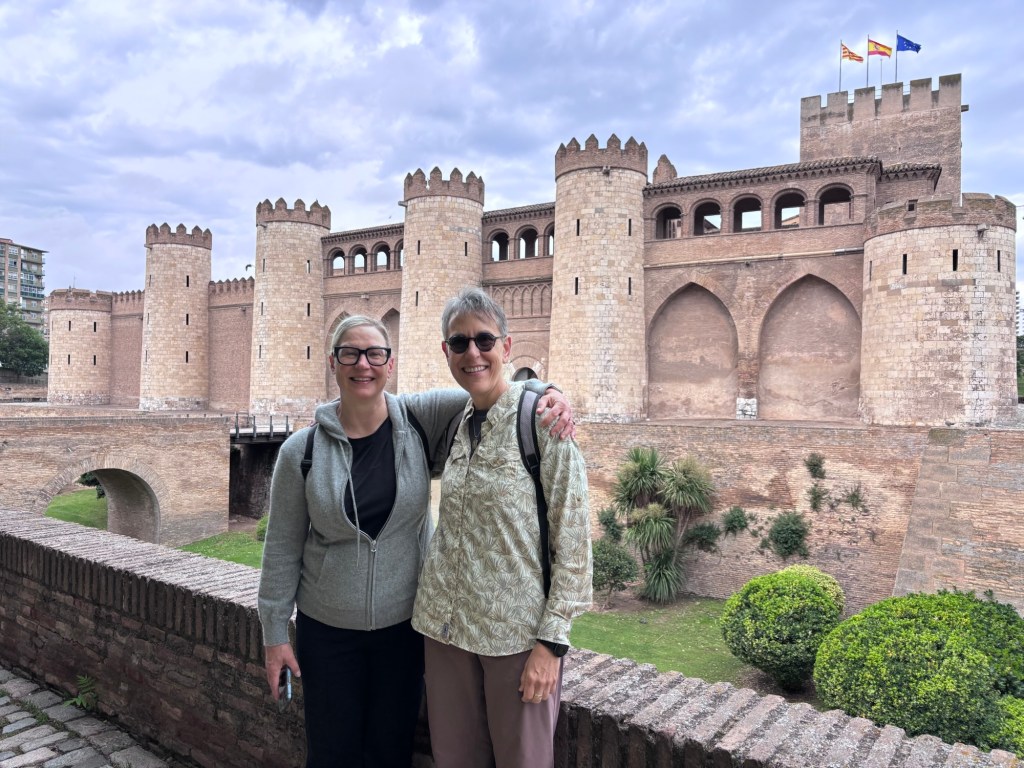
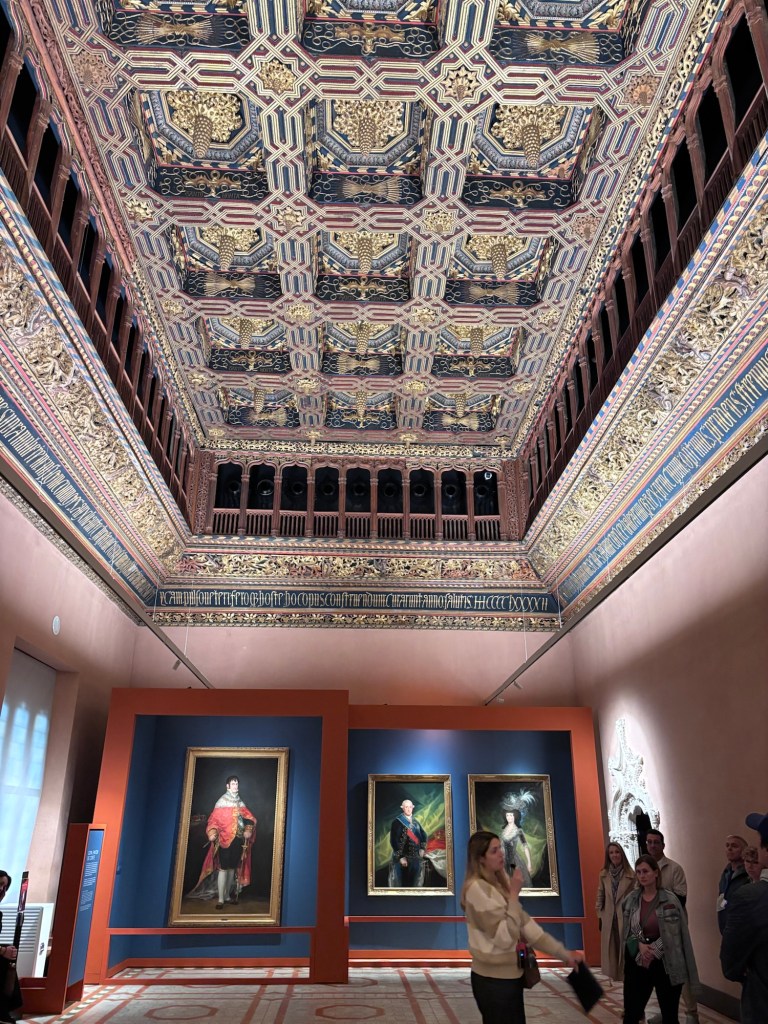
Today’s highlights included the Palace of Aljafería, the Basilica of our Lady of the Pillar, and the art of Francisco Goya. IoThe Palace was built in the 11th century for Muslim kings, and was then taken over by the Christian kings early in the next century ( in 1118), who continued to expand the palace over the next 350+ years. The Palace was declared a UNESCO world heritage site in 2001, and is one of the best preserved examples of the “Mudéjar” (a blend of Muslim and Christian) architectural styles in the world. And, today the Palace is the home of many works by Francisco Goya, who was born in a small town near Zaragoza in 1746.
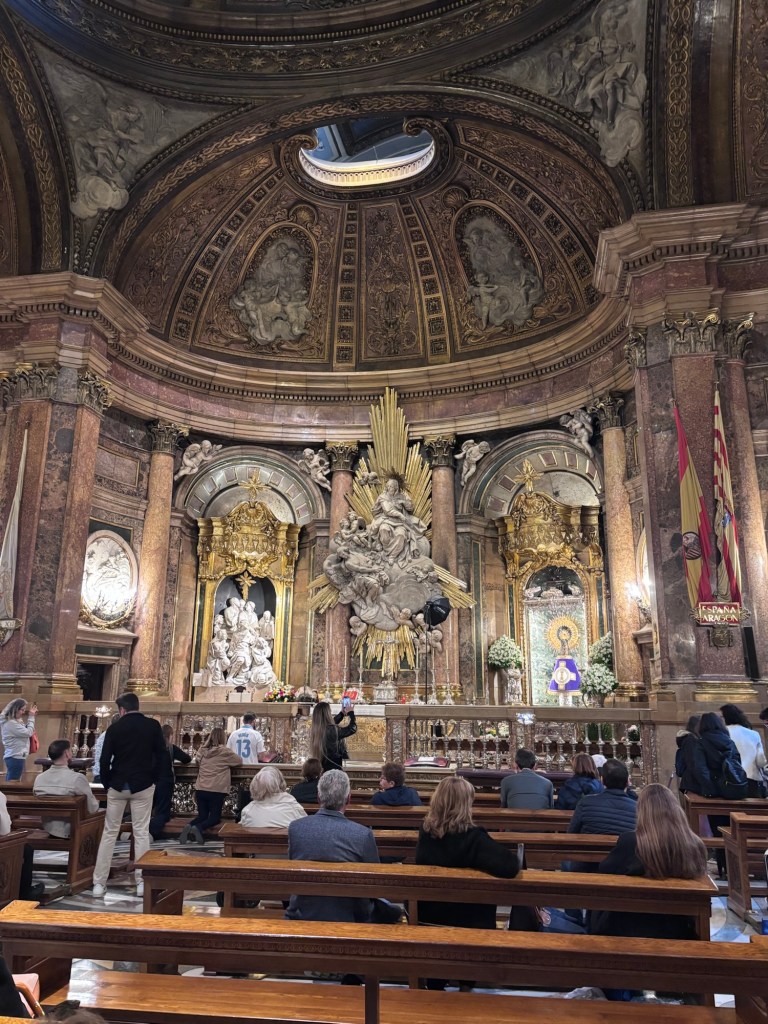
After a stop for a less-than-mediocre coffee and a too-sweet pastry, we visited the Basilica of our Lady of the Pillar. As the legend goes, back in the first century, Saint James was just about to give up on being an apostle in Spain, finding it very difficult to convert the locals to Christianity, when the Virgin Mary appeared on a pillar of marble and convinced James that “if you build it they will come.” And, so James built a church in that spot where Mary appeared – in Zaragoza. And, thus James, Saint Diego, became the patron saint of Spain. Now when the many pilgrims walk to Santiago, we might give a nod to the Virgin Mary for encouraging James to perervere.
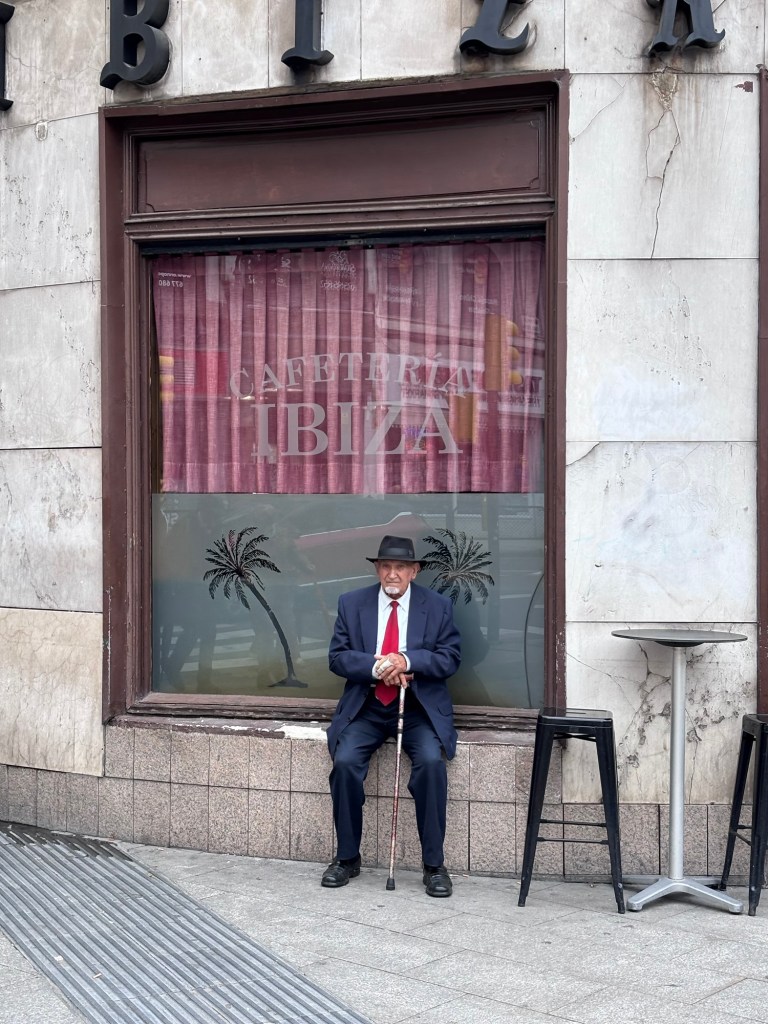
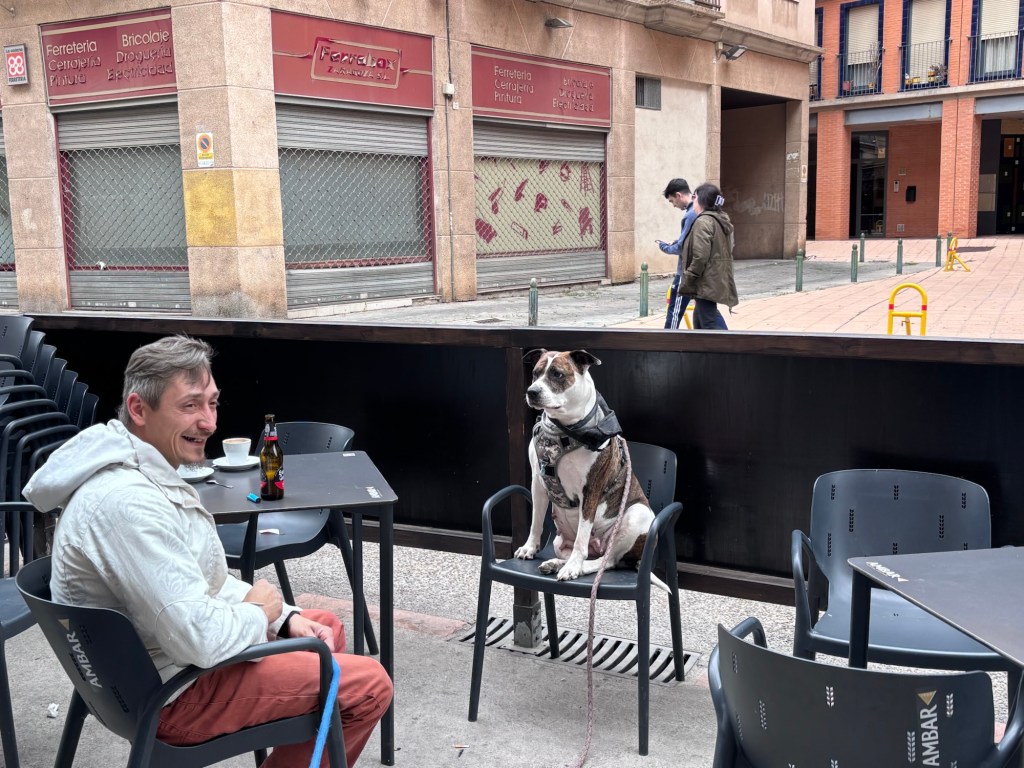
In addition to being awed by the amazing art today, Zaragoza once again offered up some fun people and pooch watching…


Leave a Reply